
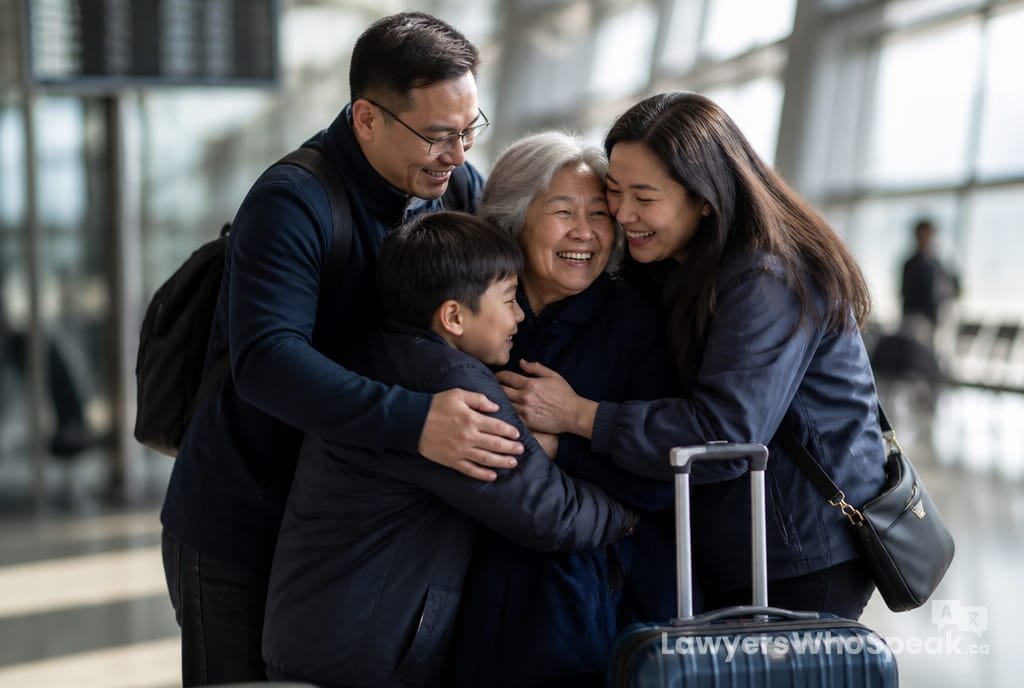
Family sponsorship is one of the most important pathways in Canada’s immigration system. Through it, Canadian citizens and permanent residents can sponsor close family members to come to Canada as permanent residents, reunite households separated by borders, and build a future together in the same country. For many families in the Greater Toronto Area, sponsoring a spouse, partner, child, parent, or grandparent is the central immigration question they will ever face.
The process is governed by the Immigration and Refugee Protection Act and administered by Immigration, Refugees and Citizenship Canada (IRCC). The rules are detailed, the documents required are extensive, and a single oversight can delay an application by months or result in an outright refusal. Understanding what is required before you begin saves significant time, money, and frustration.
This guide explains who can sponsor whom, the steps in each sponsorship category, the costs involved, the most common reasons applications are refused, and how to find an immigration lawyer in the GTA who speaks your language. Whether you are sponsoring a spouse from overseas, a child you adopted abroad, or your parents through the Parents and Grandparents Program, this guide walks through what to expect.
Meet Our Immigration Lawyers






Who Can Sponsor a Family Member to Canada
To sponsor a family member to Canada, you must meet specific eligibility requirements as a sponsor. These requirements exist to ensure that sponsored persons will have the financial and emotional support they need once they arrive in Canada.
If you or a family member are considering coming to Canada to study or work before pursuing permanent residence, a study permit or work permit may be a more suitable starting point than family sponsorship. See our guide on study permits and work permits in Canada for how those pathways work, including how a work or study permit can lead to permanent residence over time.
Basic Sponsor Eligibility Requirements
- You must be at least 18 years old
- You must be a Canadian citizen, a permanent resident of Canada, or a person registered as an Indian under the Canadian Indian Act
- You must live in Canada (with limited exceptions for citizens sponsoring spouses or dependent children)
- You must demonstrate the ability to provide for the basic needs of the person you are sponsoring
- You must not be in default of a previous sponsorship undertaking, a court-ordered support obligation, or certain government debts
- You must not have been convicted of certain serious offences, particularly offences involving violence against family members
- You must not have received social assistance for reasons other than disability
The Sponsorship Undertaking
When you sponsor a family member, you sign a binding contract called an ‘undertaking’ with the Government of Canada. The undertaking requires you to financially support the sponsored person and ensure they do not need to rely on social assistance. The length of the undertaking depends on who you are sponsoring.
| Person Being Sponsored | Undertaking Length |
| Spouse, common-law partner, or conjugal partner | 3 years |
| Dependent child (under 22) | 10 years or until age 25, whichever is earlier |
| Dependent child (22 or older, with disability) | 3 years |
| Parent or grandparent | 20 years |
| Other eligible relative | 10 years |
If the sponsored person receives social assistance during the undertaking period, the sponsor is responsible for repaying those amounts to the government. This obligation continues even if the relationship ends, the sponsor and sponsored person separate or divorce, or the sponsor’s financial situation changes.
Who You Can Sponsor
The Family Class allows you to sponsor the following relatives:
Spouse, Common-Law Partner, or Conjugal Partner
You can sponsor a spouse (a person you are legally married to), a common-law partner (someone you have lived with continuously for at least one year in a marriage-like relationship), or in narrow circumstances a conjugal partner (someone with whom you have a marriage-like relationship but who cannot live with you or marry you due to legal or immigration barriers in their country).
Spousal sponsorship is the most common type of family sponsorship in Canada. It can be done from within Canada (the In-Canada Class) or from outside Canada (the Family Class). The choice between these two pathways has important practical consequences and should be made deliberately.
Dependent Children
You can sponsor a dependent child, which IRCC defines as a child of the sponsor or the sponsor’s spouse or common-law partner who is under 22 years of age and not married or in a common-law relationship. A child 22 or older can still qualify as a dependent if they have been continuously unable to be financially self-supporting due to a physical or mental condition since before age 22.
Parents and Grandparents
Sponsoring parents or grandparents is significantly more restrictive than spousal or dependent child sponsorship. The Parents and Grandparents Program (PGP) operates on a limited-intake basis, typically through an annual invitation to apply system. Potential sponsors submit an interest-to-sponsor form during a brief intake window, and IRCC randomly selects a number of sponsors to be invited to apply.
If you are unable to access the PGP, the Super Visa is an alternative that allows parents and grandparents to visit Canada for up to 5 years per stay, with multi-year multiple-entry validity. The Super Visa requires a written invitation from the host child or grandchild, proof of medical insurance, and proof that the host meets the minimum necessary income (MNI) requirements.
Other Eligible Relatives
In limited circumstances, you can sponsor an orphaned brother, sister, nephew, niece, or grandchild under 18 who is unmarried. You can also sponsor ‘any other relative of any age’ if you have no living spouse, common-law partner, conjugal partner, child, parent, grandparent, sibling, niece, nephew, or grandchild who is a Canadian citizen, permanent resident, or registered Indian. These cases are rare and require careful documentation.

Spousal Sponsorship: Inland vs. Outland
If you are sponsoring a spouse, common-law partner, or conjugal partner, you have two procedural pathways to choose from. Both lead to the same end result, permanent residence, but the practical experience during the processing period is meaningfully different.
Outland Sponsorship (Family Class)
Outland sponsorship is processed by an IRCC visa office (often the one responsible for the sponsored person’s country of nationality or residence). The sponsored person can be inside or outside Canada during processing, but they must leave Canada to receive their permanent resident visa once approved (typically a brief trip to a U.S. border point, called ‘landing flagpoling’).
Outland is generally faster than inland sponsorship and provides clearer rights to appeal if refused. The sponsored person has fewer immigration status complications during processing and can travel in and out of Canada more easily.
Inland Sponsorship (In-Canada Class)
Inland sponsorship requires that the sponsored person be physically in Canada throughout processing. The sponsored person should have valid temporary status (visitor, worker, or student) when the application is submitted. Inland applicants are eligible to apply for an Open Work Permit while their sponsorship is being processed, which can be a significant practical advantage.
The trade-off is that inland sponsorship typically takes longer than outland, and the sponsored person may have difficulty maintaining their temporary status if it expires before permanent residence is granted. There is also no clear appeal right if an inland application is refused.
Which Pathway to Choose
This decision should be made with the advice of an immigration lawyer who can evaluate your specific situation. Factors include where the sponsored person currently lives, whether they need to be able to leave Canada during processing, whether they want to work in Canada during processing, the likelihood of refusal and the importance of appeal rights, and how processing times compare for your specific case.
The Sponsorship Application Process
The sponsorship process consists of two applications submitted together: the sponsor’s application (assessing the sponsor’s eligibility) and the sponsored person’s application for permanent residence.
Step 1: Confirm Eligibility and Choose the Right Pathway
Before beginning paperwork, confirm that you meet the sponsor eligibility requirements and that the person you want to sponsor is in an eligible category. If you are sponsoring a spouse or partner, decide between inland and outland sponsorship. If you are sponsoring parents or grandparents, confirm whether the PGP is accepting interest-to-sponsor forms in the current year.
Step 2: Prepare the Application Package
The application package includes detailed forms about you and the person you are sponsoring, supporting documents (birth certificates, marriage certificates, identity documents, proof of relationship), and biometric data. Some of these documents may require notarization or certification, particularly certified true copies of identity or marriage documents from outside Canada. In Ontario, notarization is performed by lawyers or commissioners of oaths, not by a separate notary profession as it is in many other countries. For more on this distinction, see our guide on do I need a lawyer or a notary in Canada. For spousal sponsorship, you must also provide substantial evidence that the relationship is genuine. This is one of the most scrutinized parts of the application.
Step 3: Pay the Fees and Submit
Fees are paid online to IRCC. As of 2026, sponsorship fees are approximately:
| Fee Type | Approximate Amount (2026) |
| Sponsorship application fee | $85 |
| Principal applicant processing fee | $545 |
| Right of Permanent Residence Fee (adult) | $575 |
| Biometrics (per person) | $85 individual / $170 family |
| Dependent child processing fee | $175 per child |
| Medical exam | Varies by country, typically $200-$400 CAD |
Total typical cost for sponsoring a spouse with no dependent children is approximately $1,290 in IRCC fees, plus medical exam and biometrics. Legal fees, if you retain an immigration lawyer, are separate.
Step 4: Biometrics and Medical Examination
After submission, the sponsored person will receive instructions to provide biometrics (fingerprints and a photo) at a Visa Application Centre. They will also need to undergo a medical examination by an IRCC-approved panel physician. Both must be completed within specified timeframes.
Step 5: Processing and Decision
Processing times vary significantly by application type and visa office. As of 2026, spousal sponsorship from inside or outside Canada generally takes between 10 and 24 months. Parent and grandparent sponsorship takes considerably longer, often 24 to 36 months. Throughout processing, the sponsored person may be required to provide updated documents, attend an interview, or respond to specific questions from IRCC.
Proving a Genuine Relationship: The Critical Element for Spousal Sponsorship
For spousal and partner sponsorship, IRCC must be satisfied that the relationship is genuine and was not entered into primarily for immigration purposes. This is the single most common ground for refusal of spousal sponsorship applications, and the evidence required is significant.
What IRCC Looks For
- Long-term, consistent communication between the parties (text messages, calls, emails over years)
- Photos together at different times and in different settings, with family members and friends
- Joint financial arrangements (joint bank accounts, joint utility bills, shared lease or mortgage)
- Travel together, with documentation (boarding passes, hotel bookings, entry stamps in passports)
- Wedding photos, marriage registration, evidence of attendance by family and friends from both sides
- Sworn declarations from family members and friends attesting to knowledge of the relationship
- Evidence of cohabitation if applicable (lease agreements, mail addressed to both parties)
Common red flags that trigger additional scrutiny:
- Significant age gap without contextual explanation
- Brief courtship before marriage
- Marriage shortly after a refused application of another type
- Lack of documented communication or visits before marriage
- Inconsistent answers about basic facts of the relationship
- Lack of cultural or religious ceremony where one would be expected
- History of multiple previous sponsorships by either party
None of these factors alone disqualify an application. Many genuine relationships involve some of them. However, when several appear together, IRCC will typically request more detailed evidence or schedule an interview to assess the relationship in person. Working with an immigration lawyer experienced in spousal sponsorship can help you anticipate these issues and present evidence proactively.
Common Reasons Sponsorship Applications Are Refused
Refusals are emotionally devastating and financially costly. Understanding the common reasons applications fail allows you to address them before submitting.
- Inadequate proof of a genuine relationship: for spousal sponsorship, this is the most common refusal ground. Insufficient documentary evidence or inconsistent statements during an interview can be fatal.
- Sponsor ineligibility: the sponsor was in default of a previous sponsorship, had received social assistance, had a relevant criminal record, or otherwise failed to meet the eligibility criteria.
- Sponsored person inadmissibility: the sponsored person was inadmissible to Canada for criminal, security, medical, or financial reasons. Medical inadmissibility, where the person’s health condition would place excessive demand on Canadian healthcare or social services, is a particularly painful refusal ground.
- Incomplete application: missing forms, missing documents, or missing signatures. IRCC has discretion to return incomplete applications without processing them, costing the applicant time and sometimes the fees.
- Missed deadlines: if biometrics or additional documents requested by IRCC are not provided within the deadline, the application can be refused for non-compliance.
- Misrepresentation: providing false information or omitting material facts. Misrepresentation findings carry a five-year ban on reapplying and can affect future immigration applications indefinitely.
If Your Application Is Refused
A refusal is not necessarily the end of the road, but the options depend on which type of sponsorship was refused and where the refusal occurred.
Appeal to the Immigration Appeal Division (IAD)
Outland Family Class refusals can be appealed to the Immigration Appeal Division of the Immigration and Refugee Board. The IAD provides a full reconsideration of the case, with both written submissions and an in-person hearing. The sponsor presents the case to a board member who decides whether to overturn the visa officer’s refusal. The IAD has broad authority to consider humanitarian and compassionate circumstances. Appeal timelines vary but are generally measured in months, sometimes more than a year.
For a fuller explanation of the appeal process, other grounds of inadmissibility, and humanitarian and compassionate applications, see our guide on immigration appeals and inadmissibility in Canada.
Reapplication
For refusals that cannot be appealed (such as inland spousal sponsorship), the typical option is to address the issues that caused the refusal and reapply. Reapplications must directly address the refusal grounds with new or stronger evidence. Simply resubmitting the same package will produce the same result.
Judicial Review
In limited circumstances, a refused application can be challenged by judicial review at the Federal Court. This is a legal challenge to the decision itself rather than a fresh hearing of the case, and it succeeds only where there was a legal error or unreasonable conclusion. Judicial review is time-sensitive (the application must be filed within 15 or 60 days of the refusal depending on whether the refusal is inside or outside Canada) and should always be pursued with an immigration lawyer.

Why Language Matters in Family Sponsorship
Few areas of law require more careful, accurate communication than immigration. The sponsored person’s full story, including life history, family relationships, education, employment, and intentions in Canada, must be presented in writing and sometimes orally in a way that satisfies an IRCC officer reviewing the application from another country. Misunderstandings, mistranslations, or incomplete answers can be the difference between approval and refusal.
Working in Your First Language
An immigration lawyer who speaks your language can review documents in their original form (without relying on translations that may not capture nuance), discuss sensitive personal information about your relationship and family background, prepare you for any interview that may be scheduled, and explain procedural decisions and strategy in the language you understand most precisely. For sponsorship applications, where the personal story behind the application is often as important as the documents, this is genuinely transformative.
Translation of Documents
All documents submitted to IRCC must be in English or French. Documents in any other language must be accompanied by a certified translation. An immigration lawyer who speaks your language can help you identify which documents you actually need, recommend qualified translators, and review translations for accuracy before submission. Errors or omissions in translation can be treated as misrepresentation, with serious consequences.
Finding a Bilingual Immigration Lawyer
Lawyers Who Speak connects GTA families with verified, Law Society of Ontario-licensed immigration lawyers who speak their language. For general guidance on the search process, see our companion guide on how to find a multilingual lawyer in Toronto. If you are looking for an immigration lawyer for a specific community, browse our dedicated pages for Punjabi-speaking immigration lawyers in the GTA and Arabic-speaking immigration lawyers in the GTA.
Frequently Asked Questions
How long does it take to sponsor a spouse to Canada?
As of 2026, IRCC’s processing time targets for spousal sponsorship are approximately 10 to 12 months for both inland and outland applications. Actual processing times can be significantly longer depending on the visa office handling the application, the completeness of the application, whether an interview is required, and whether additional documents are requested. Parent and grandparent sponsorship typically takes 24 to 36 months. You can check current processing times for your specific application type on the IRCC website.
Do I need a lawyer to sponsor my family member, or can I do it myself?
You are not legally required to use a lawyer to sponsor a family member. IRCC accepts applications submitted directly by the sponsor. However, an immigration lawyer adds significant value, particularly for spousal sponsorship where proving the genuineness of the relationship requires strategic presentation of evidence. A lawyer can identify weaknesses before submission, prepare you for an interview if one is required, respond effectively to procedural fairness letters, and represent you on appeal if the application is refused. For sponsorship cases involving any complexity (medical inadmissibility, prior immigration history, criminal records, complex family situations, or short-courtship relationships), legal representation is strongly recommended. For a sense of cost expectations, see our guide on how much a lawyer costs in Ontario, and for free consultation options before committing, see our guide on how to get legal advice in Ontario.
Can I sponsor my parents to come to Canada permanently?
Yes, but the program is restricted. The Parents and Grandparents Program (PGP) is the only pathway for parents and grandparents to obtain permanent residence through family sponsorship. The PGP typically opens for a limited intake period each year, during which Canadian citizens and permanent residents can submit an interest-to-sponsor form. IRCC then randomly invites a number of submitters to file complete applications. If you are not selected, you can apply again the following year. As an alternative or supplement, the Super Visa allows parents and grandparents to visit Canada for stays of up to 5 years at a time with multiple-entry validity over 10 years. The Super Visa does not lead to permanent residence but provides extended family time.
What happens to a sponsorship if the relationship ends during processing?
For spousal and partner sponsorship, the relationship must be genuine and continuing throughout processing. If the relationship genuinely ends before permanent residence is granted, both the sponsor and the sponsored person are legally required to notify IRCC. The application will typically be refused. If permanent residence has already been granted when the relationship ends, the sponsored person generally retains their permanent resident status, but the sponsor remains responsible for the financial undertaking. Separations and divorces involving sponsorship situations have important legal implications that intersect both immigration law and family law; see our family law practice area page for related information.
Can a Canadian citizen sponsor a family member while living outside Canada?
In limited circumstances, yes. A Canadian citizen (but not a permanent resident) can sponsor a spouse, common-law partner, conjugal partner, or dependent child from outside Canada, provided the citizen intends to return to Canada once the sponsored person becomes a permanent resident. A permanent resident sponsor must be residing in Canada at the time of the application. For Canadians living abroad who plan to return, careful timing and documentation of the intent to return are essential. An immigration lawyer can help structure the application to address this requirement properly.
Find an Immigration Lawyer in the GTA Who Speaks Your Language
Family sponsorship is one of the most consequential immigration decisions you will ever make. Having an immigration lawyer who can guide you through the process in your first language ensures that every detail of your application is accurate, every requirement is met, and every advantage is used. For families bringing loved ones to Canada, that confidence matters.
Lawyers Who Speak connects GTA families with verified, Law Society of Ontario-licensed immigration lawyers who speak their language. Search by language and practice area to find a qualified immigration lawyer near you.
Disclaimer: This article is for informational purposes only and does not constitute legal advice. Immigration matters are fact-specific, and the rules and processing times can change. If you are planning to sponsor a family member to Canada, please consult a qualified immigration lawyer licensed in Canada for advice specific to your situation.